I’m a crime and historical novelist. I’ve written nearly fifty books, listed here, three of which have been televised. Awards include the Diamond Dagger of the Crime Writers Association, the Gold Crown of the Historical Writers Association and the Historical Dagger (3 times).

-
-
Thriller of the Month
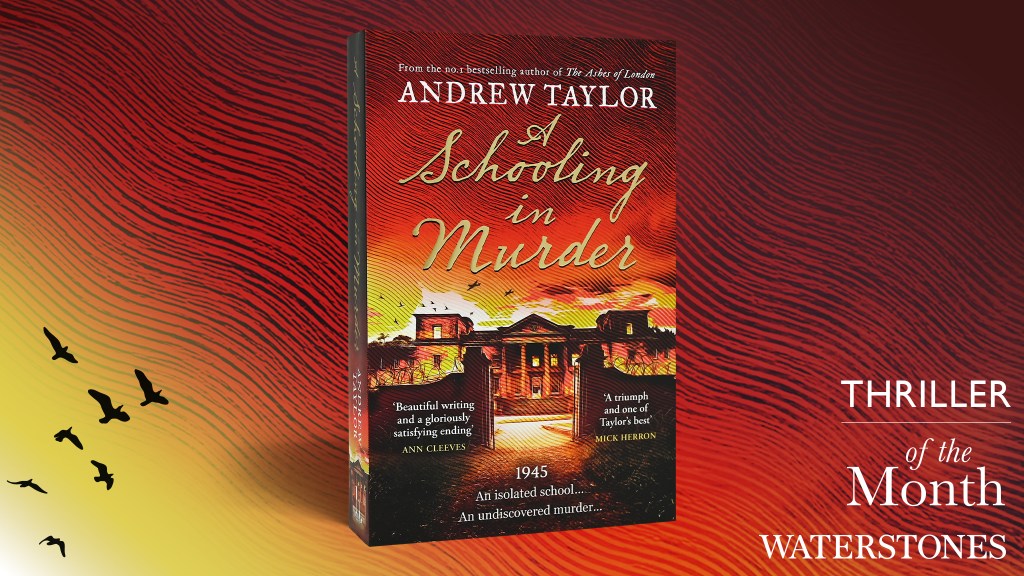
I am very cross with myself for having failed to post anything for over six months. But a piece of good news has at last galvanised me into action. My latest novel, A Schooling in Murder, is just out in paperback and it has been selected as Waterstones Thriller of the Month for March.
Treason
In other news, I’ve finished my new book, Treason, the seventh title in my seventeeth-century series about the tangled lives of James Marwood and Cat Lovett. It moves their lives seventeen years into their future, to the turbulent prologue to the Glorious Revolution. When I say finished, I mean my editor and agent read the first draft and gave me their notes; I’ve now reshaped and rewritten parts of the book into what’s effectively a second draft.
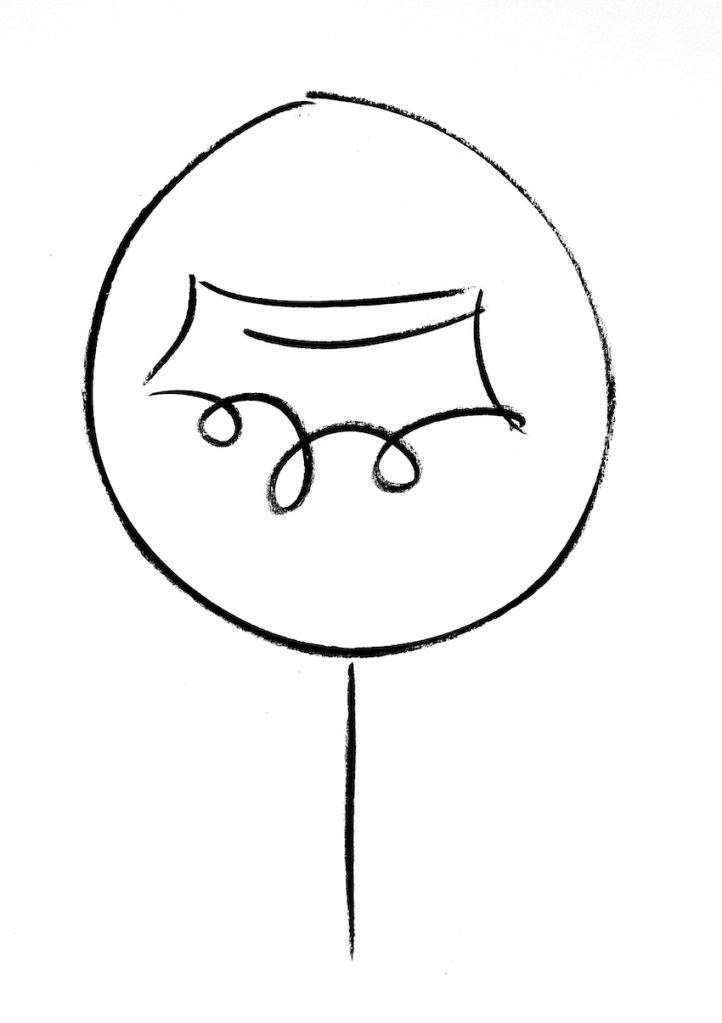
Here’s a preview of a mysterious sign that plays a crucial part in the development of the story. Its meaning and purpose are part of the backbone of the novel. Any idea what it is?
I’ve written a historical note for those readers who, like me, are curious to know more about the context of a novel set in the past. The process reminded me of the gulf that lies between the historian and a historical novelist. They are different trades.
With luck, I can now put Treason on one side until the copy-editing stage before it goes to the printer. This won’t be for a while. HarperCollins, have currently scheduled publication for spring next year.
Oxford Events
Oxford is one of my favourite cities so I’m particularly looking forward to two events there this year. The first is the Oxford Literary Festival. I’m looking forward to talking about historical crime fiction with fellow historical novelist Carolyn Kirby on Saturday 21 March at 2pm.
Later in the year, I’ll be back in Oxford for the long-running Crime Fiction Weekend on 4-6 September at St Hilda’s College. I’ve been coming to this very enjoyable weekend of discussing and celebrating the genre for a quarter-century, on and off. This year the theme is ‘Rotten Apples’. They have invited me to be the Guest of Honour, which I am going to interpret as a compliment rather than as a comment on my degenerate moral fibre.
-
Places that haunt you
Thirty years ago I first went to Piercefield. It’s a ruined house that stands cheek-by-jowl with Chepstow Racecourse. In fact the racecourse sits in a portion of what was once the 300-acre park surrounding the mansion.
Two hundred years ago, Piercefield would have been the sort of house a Jane Austen heroine would dream of. In those days, it was a splendid place, its austerely elegant central block designed by Sir John Soane (the architect of the old Bank of England), with ornate, classically-inspired wings, supported by the revenues from a magnificent 3000-acre estate.
In those days, its master was a black slave-owner named Nathaniel Wells. The son of a slave and her white master, he had inherited his father’s immense fortune. He spent some of it on Piercefield.
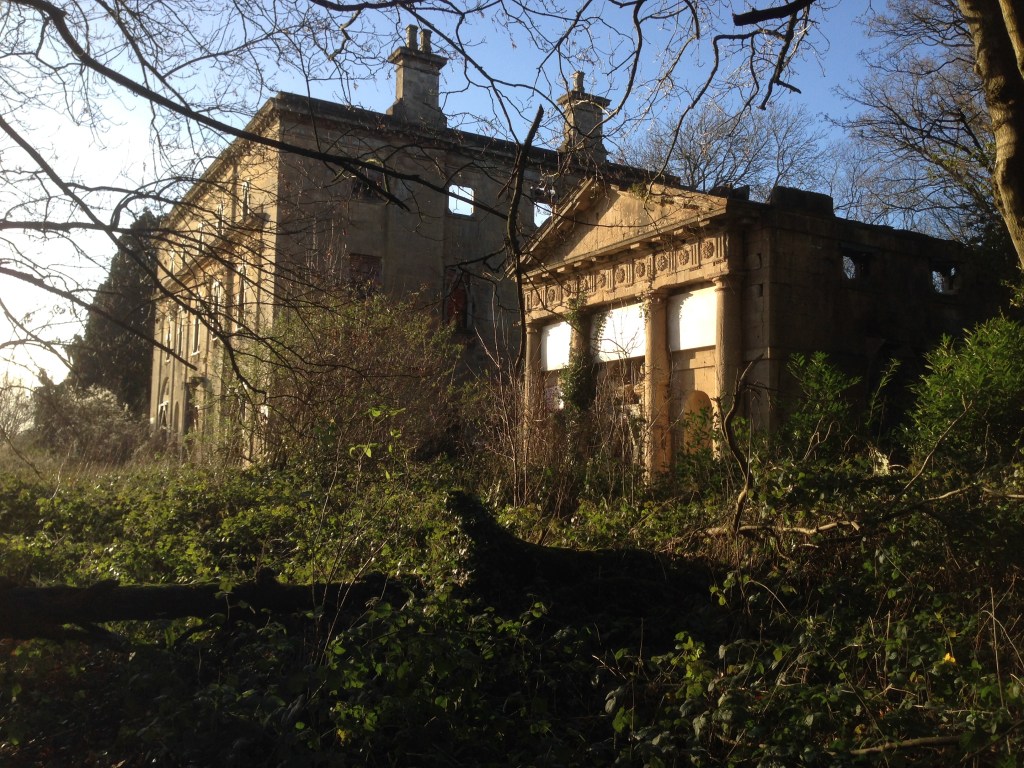
It has the reputation of being an unlucky house, and its subsequent history confirms this. It has become a roofless ruin. Here’s what it looked like a few years ago:
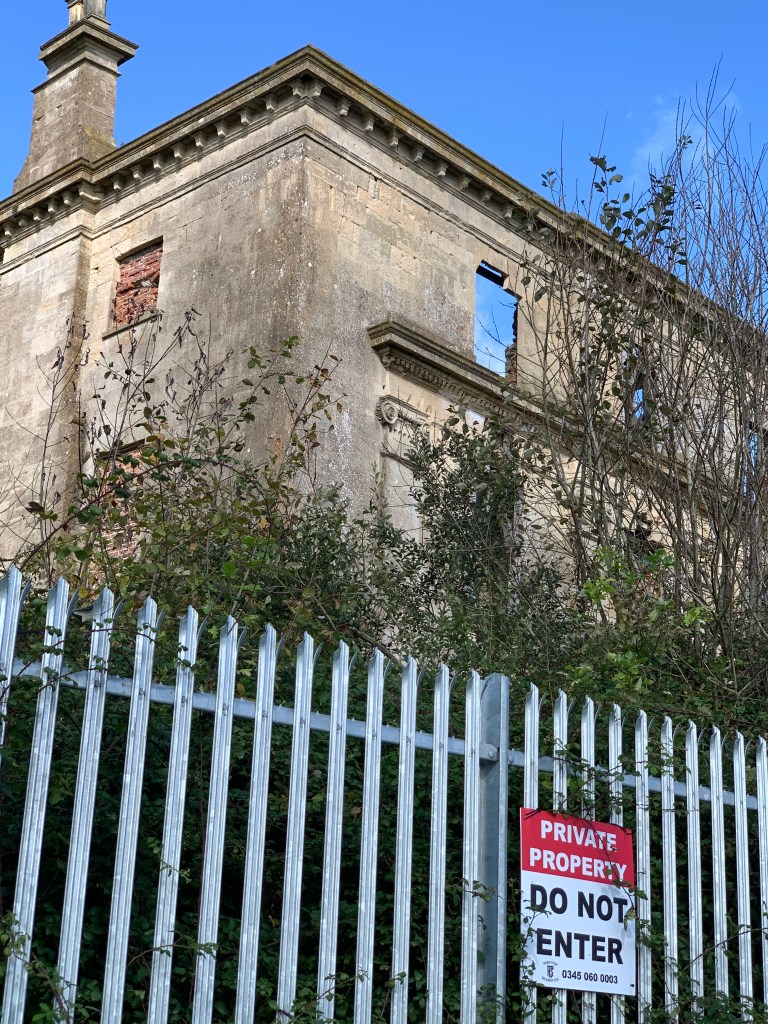
Now the house is masked by a viciously effective security fence. Here’s what it looks like today:
As soon as I saw Piercefield all those years ago, I knew I would use a version of it as a setting. My fictional version, Monkshill Park, was a major location for my novel The American Boy (2003) about the young Edgar Allan Poe. It showed the house in its Regency prime.
But Piercefield hadn’t finished with me, nor I with it. I wanted to return there to find out what Monkshill might be like over a hundred years later. That was where my latest novel started: by my thinking about Monkshill/Piercefield. The result of that is my latest book, A Schooling in Murder (2025), in which the house has become the ramshackle home of a third-rate girls’ boarding school in the closing months of World War II.
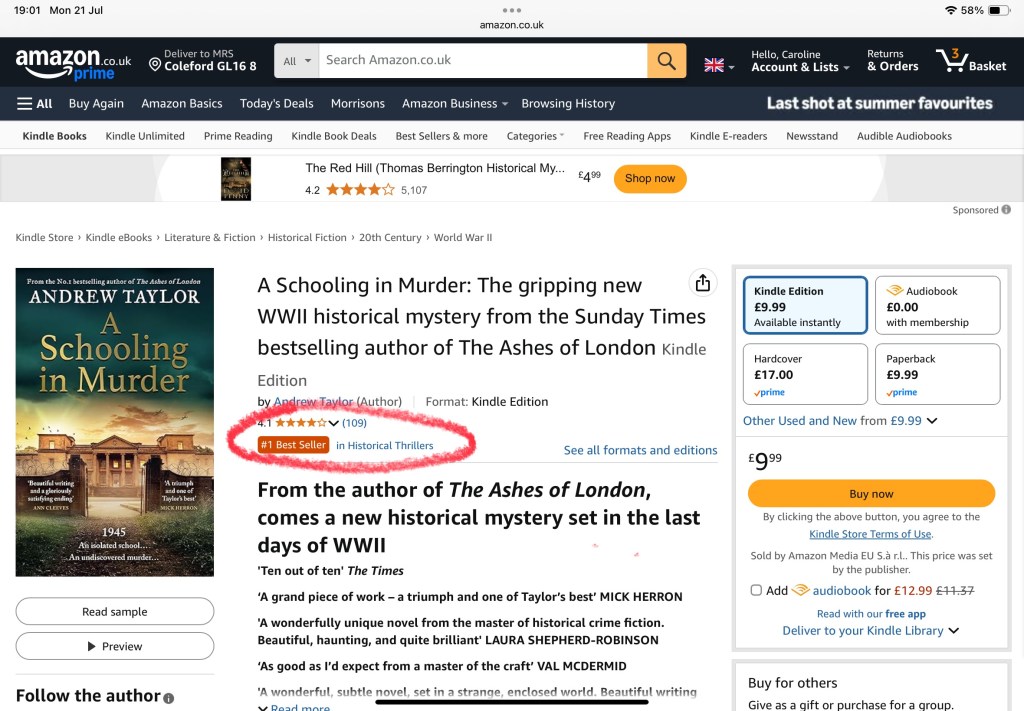
Which is as good a place as any to tell you that the novel is Amazon’s number one bestseller in historical thrillers and has reached number 4 in the Kindle bestsellers chart.
Finally, welcome to new subscribers. You are the salt of the earth!
-
A Note on Authors’ Egos
For those of you sensible enough not to write books, a word of advice: authors are fragile creatures, usually vain and insecure, whom it is frighteningly easy to damage with a careless word or even (sometimes worse) with no word at all. Please be careful how you handle them.
Fortunately such creative fragility has its positive side. An encouraging word from a person whose judgement an author respects is equivalent to a glass of champagne or a dry martini on an empty stomach. The world instantly becomes a kinder, happier place.
Which is why I am rushing to broadcast quotations from two national reviews of my latest novel which appeared this week.
‘Taylor’s ability to conjure time past is second to none and here he blends a school story for adults, a ghost story and a mystery for a sublime evocation of a closed world…’ – Guardian
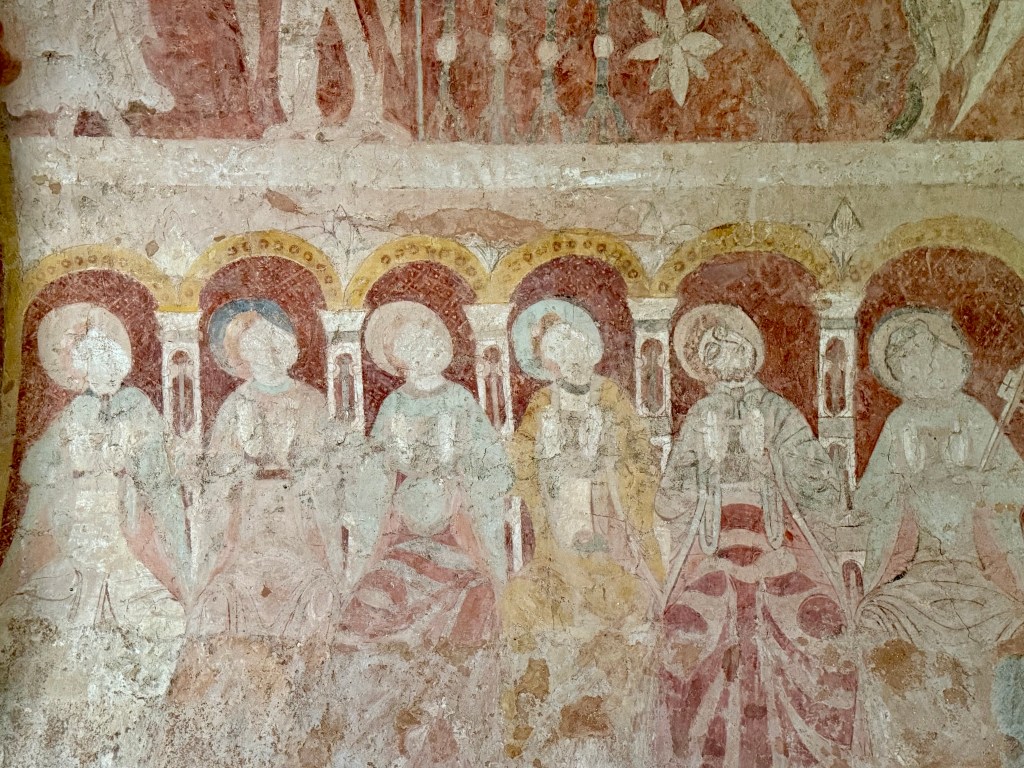
‘Taylor’s position at the apex of historical crime writers is reinforced [by] this page-turner…’ – Financial TimesAnyway, to change the subject and raise the tone, here are a couple of photos of the medieval wall-paintings at Kempley church, Gloucestershire. These are of national (and in some cases international) importance. The chancel vault and walls is crammed with extraordinary twelfth-century work like this one of six apostles staring adoringly up at Christ:
And here is another, from the fifteenth century, around a window (with much later stained glass), which is in the nave:

These are just two of the paintings. I urge you to go and see the church if all possible and relish its impact as a whole. Then write something appreciative in the visitors’ book. Artists, even dead ones, have fragile egos too.
-
The First Week…
Writing a novel is a long process – it takes well over a year in my case, sometime more like two. Once it’s published, though, there’s nothing more an author can do: the book is out in the wild, where it must take its chances among hundreds of thousands of others.
A Schooling in Murder is now a week old, and so far the omens are good. We had a great launch party for it in the Forest of Dean. Sales were brisk, and it was definitely an occasion to remember.
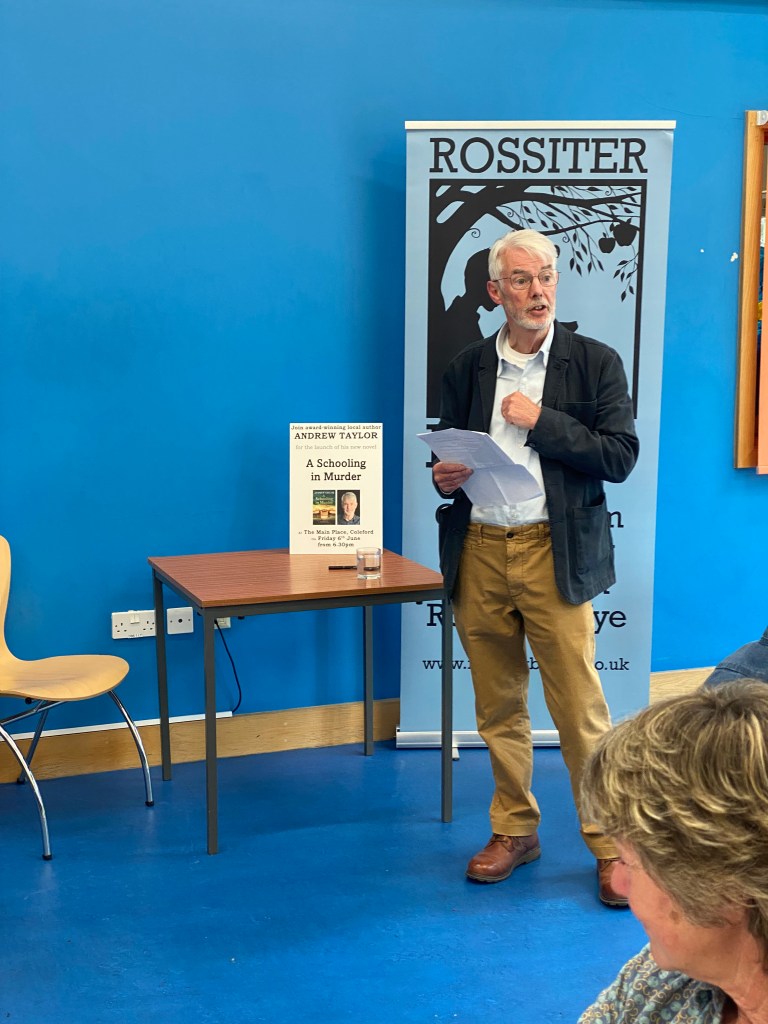
For an author there’s a particular pleasure in being able to address a captive multitude…

To make it even better, I’d just heard that two national reviews have already been published and that The Times had chosen A Schooling in Murder as a Book of the Month.
‘A Schooling in Murder turns the country house mystery inside out with wit and wisdom. Ten out of ten’ – The Times
‘An absolute masterpiece of rising tension’ – Daily ExpressI’ll be talking about A Schooling in Murder again at Rossiter Books in Monmouth on 26 June, in Ledbury on 10 July, and at the Theakstons Old Peculier Crime Festival on 19 July. Full details here.
-
A Schooling in Murder
May 2025
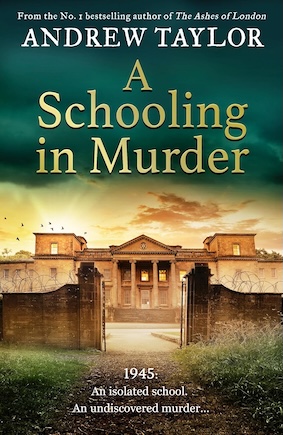
I love writing a series, such as my ongoing Marwood and Lovett books set in the late seventeenth century. But occasionally it’s refreshing to come up for air and write something completely different. A SCHOOLING IN MURDER fits the bill perfectly for me. I can’t remember when I last enjoyed writing a book so much.
I’ve been delighted that it’s already attracted so much advanced praise from authors I particularly admire.
‘A grand piece of work – a triumph and one of Taylor’s best’
MICK HERRON
‘A wonderful, subtle novel, set in a strange, enclosed world. Beautiful writing and a gloriously satisfying ending’
ANN CLEEVES
‘As good as I’d expect from a master of the craft’
VAL McDERMIDThe novel is a country house mystery set in the dying days of World War II and complete with a sketch map and a list of characters. There are clues, secrets, a closed circle of suspects – and more deaths to come. But this is a world away from the usual pastiche of a Golden Age whodunit. For a start the detective is also the victim – as well as the narrator. There’s a story within the story. There’s even a doomed romance.
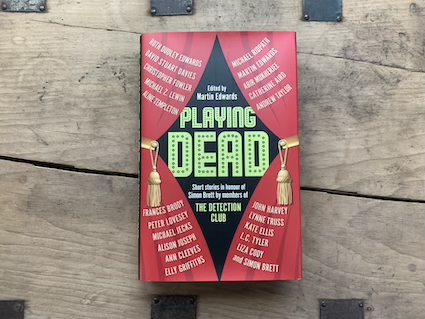
PLAYING DEAD
For thirty years I’ve been a member of the Detection Club, the oldest crime writers organisation in the world. Every now and then we publish an anthology of short stories. PLAYING DEAD is our latest. It’s in honour of the eightieth birthday of Simon Brett, our President Emeritus, and edited by our current President, Martin Edwards. Mine is called ‘Dead Ground’. It’s a story set in the present whose theme has been niggling at me for years. Leaving aside my modest contribution it has some great contributions from the likes of Elly Griffiths and Ann Cleeves, Abir Muckerjee and Simon himself.REVIEWS
I’m reducing my reviewing at present but recent ones for the Spectator include Jo Harkin’s historical novel, The Pretender; Nick Harkaway’s Smiley continuation, Karla’s Choice; and what’s probably Don Winslow’s last novel, City in Ruins. You can find links to them here, on the Spectator’s website.

Navigation
About
Andrew Taylor is a crime and historical novelist. He has written nearly fifty books, listed here, three of which have been televised. Awards include the Diamond Dagger of the Crime Writers Association, the Gold Crown of the Historical Writers Association and the Historical Dagger (3 times).
 Andrew Taylor Author